
The Sandwich Generation, Caregiving & ADHD: My Conversation with LeAnn Levering
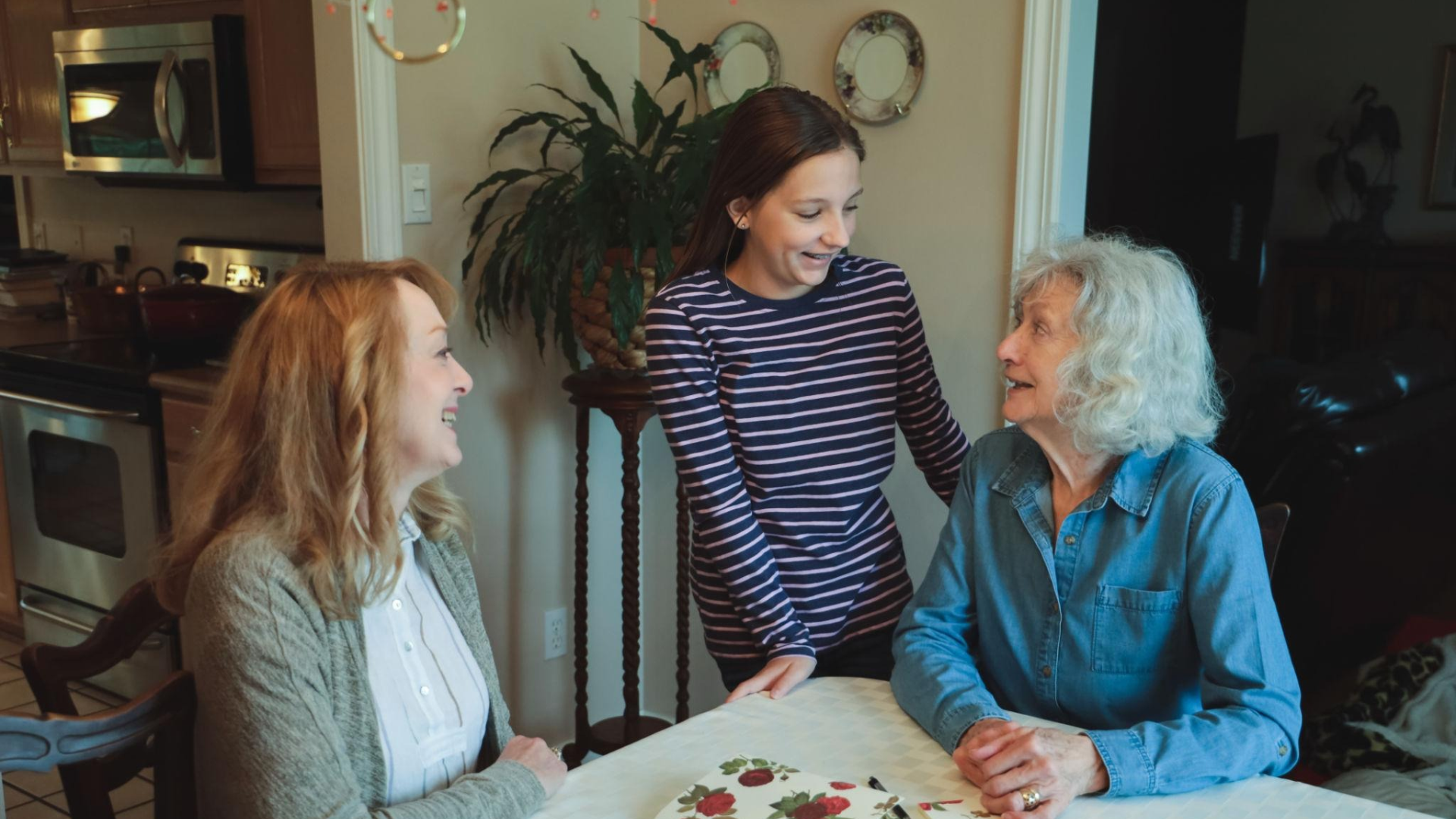
When I read LeAnn Levering's bio at the top of this episode, I had to laugh. Tech career. An MBA from UT Austin. A master's in social work from Catholic University. A psychology degree from Duke. Licensed to provide therapy in three states. Trained in ACT, DBT, CBT and EMDR. A seat on CHADD's editorial advisory board. And she told me she's about to start her PhD.
I said it on the show and I'll say it again here: that is the poster child for an ADHD bio. For those of us who can't sit still and feel the need to overachieve, LeAnn is right up there.
LeAnn is the founder of Levering Mind. She lives with ADHD herself, and she's raising two boys. We first met at a conference, where we ended up sitting together at lunch. Our conversation covered imposter syndrome, missed diagnoses, what happens to ADHD as we age, and the very personal experience of helping her 86-year-old mother rightsize. Here are the moments that stayed with me.
"Somebody made a mistake and let me in"
I asked LeAnn whether she still hears her own bio and thinks, that can't be me. She closed her eyes and nodded before she said a word.
Growing up as the second child after a high-achieving sister with strong executive function, LeAnn felt like "a dummy." Even at Duke, she believed the admissions office had made a mistake. Every high test score or new job felt like another narrow escape: I got past another one.
"That voice has been hanging out there," she told me. "It's taking up less space now than in the younger years, but it was with me all those years. A co-pilot."
This is one reason I keep the podcast so real. When someone as accomplished as LeAnn says she has felt like an imposter, it helps the rest of us see that this feeling is part of living with ADHD, and that we're not alone in it.
Assessed as a child, and still missed
LeAnn's mother noticed something when LeAnn was about eight or nine. She couldn't get her daughter's attention. LeAnn would stare off into the clouds, and her mom worried that something was wrong.
LeAnn was assessed, but the evaluators found an auditory processing disorder, not ADHD. The fix was to seat her at the front of the class so she could read the teacher's lips. Nobody asked why nothing held her attention, or why she spent high school as "a ball of anxiety and depression."
Then, close to 40, a friend handed her one of Dr. Ned Hallowell's books. Her reaction was a-ha. She pulled out her old assessment and got evaluated again. Even her uncle, a child psychologist who had looked at her as a child, admitted, "Sorry, we just missed it then."
I shared my own version of this. When my mom took me to the doctor as a child, she was told I simply had "a nervous mother." It's a big part of why I named this podcast Grandma Has ADHD. Women, and especially inattentive women who could sit quietly and read for hours, were far less likely to be identified.
We both love the Scooby-Doo meme where the gang pulls the mask off the villain labeled "Anxiety and Depression" and underneath is "Undiagnosed ADHD." As LeAnn put it, "For so many females, that is exactly what happens. We go through years and years of treatment for anxiety and depression. I'm not saying it's not there. It's just that we're not also addressing the type of brain we have."
Therapy has to be adapted for ADHD brains
Part of LeAnn's work is training clinicians, and she explained why it matters. Most clinicians get little specific education about ADHD, and what they do get is mostly about diagnosis. Common therapies like ACT, CBT and DBT are less effective for ADHD clients unless they're adapted.
I told her about a therapist who wanted me to journal. I knew that wasn't going to happen. Before my diagnosis, though, I would have said "sure," not done it, beaten myself up, and maybe even avoided therapy out of embarrassment.
LeAnn sees clinicians fixate on things like what it "means" when a client is late. She tries to be more flexible, because for ADHDers, being late or missing homework carries years of emotional baggage. We've been told, or we've told ourselves, that it means we don't care or that we're irresponsible. Sometimes it's just, as she put it, "I have trouble organizing my time. Can I get some grace?"
ADHD in our 50s, 60s and 70s
I asked LeAnn what clinicians are missing about ADHD later in life. Her first answer was hormones. As estrogen declines, women can lose some of the scaffolding that helped them cope, and everything gets harder. She'd like to see more research, more education for clinicians, and more guidance for prescribers. She was also clear that medication isn't her specialty.
We also talked about a paradox many of us know: the more we have to do, the more we get done. I'm about to become an empty nester, and having more open space can be hard for an ADHD brain. LeAnn added that later life brings less structure along with more unpredictable demands, like suddenly caring for a parent or a child away at college who needs a different kind of support.
Then there's grief. Grief affects executive function for everyone, and LeAnn pointed out that it isn't only about death. It can come with a role change, a divorce, or a child moving out. I remembered a college professor who said we go through losses our entire lives: eyesight, a knee that doesn't cooperate anymore, our youth.
The good news is that ADHDers tend to be curious. As Dr. Hallowell says, you have to "find your difficult," the thing that keeps your brain engaged. LeAnn added an important layer: this stage of life is a chance to ask, what do I actually value? Many of us spent decades pleasing other people or filling roles we thought we were supposed to fill.
Rightsizing with her mother: the sandwich generation
This part of the conversation hit close to home for me as a senior move manager. When I asked LeAnn what she'd take away if she could keep her ADHD but lose one challenge, she said, "I'd like to have a tidier house." She also shared that she's in the middle of helping her 86-year-old mother go through years' worth of storage units.
Her mother doesn't want to leave her family with a burden, and she wants to know what's actually in those units. So LeAnn and her sons have made several trips to Houston to sit with her while she decides what matters now and shares the stories behind her things.
"Then actually getting to see my kid, her grandkid, want some of these items because he attached some meaning to them," LeAnn said. "It was really beautiful."
My suggestions for anyone going through this:
Record the stories. Capture the memories behind the objects so they live on.
Think rightsizing, not downsizing. Focus on the life your parent wants to live now and what they'll actually use.
Get professional help. A senior move manager can sort, assess value, and guide the emotional side of the process. You can find one near you through the National Association of Senior and Specialty Move Managers at NASMM.org.
I also have to mention that multiple storage units are a "ding, ding, ding" for me. People often explain heavy accumulation by saying someone lived through the Depression or immigrated. But if that were the whole story, everyone who lived through those experiences would have storage units, and they don't. LeAnn laughed and said her own kids recently looked at their grandmother and said, "I'm seeing a pattern here. You might be one of us."
LeAnn's biggest hack: making room for the inner critic
When I asked LeAnn for the one thing that has helped her most, she didn't name an app or a planner. She talked about how she relates to the internal chatter: the imposter syndrome, the guilt about not being with her mom all the time.
Her approach is to let those voices exist alongside her without letting them blind her to what matters. She also listens for what a harsh voice might be pointing to. "If I'm feeling guilt and shame about not being with my mother all the time, that reminds me my mother's really important," she said. "Maybe there's a gap in her caretaking, and I can do something about that instead of sinking down into the guilt and shame."
In my coaching, I sometimes ask clients to name that critical voice after someone they can't stand. It creates a little distance, and it's surprisingly effective.
Would she press the button?
I ask every guest: if you could press a button and no longer have ADHD, would you? LeAnn knew the question was coming because she listens to the show.
"No, I would not. Even the things I regret most in life I wouldn't change because they've led me here. My ADHD is more than just the difficulties. It's the type of brain I have. Yes, it's led me into some trouble, but it's also led me to amazing, wonderful things. It's the source of my excitement, my exuberance and my curiosity. I can't, and I wouldn't, remove ADHD, because it's me."
If you think this might be you
LeAnn's advice for listeners who are recognizing themselves:
Start where it's free. Read ADHD books or listen to ADHD podcasts and see if you notice a pattern.
Talk to your primary care doctor. Many medical issues, like sleep disorders and thyroid problems, can look like ADHD, so it's worth ruling those out first.
Find the right support. That might be a psychologist for a formal assessment, a therapist who understands ADHD, or an ADHD coach.
I added a couple of points from my own experience with this podcast. Ask whether a doctor is familiar with adult ADHD before you rely on their opinion, because many guests have been told "no" by providers who didn't recognize it. And look back at your life. You don't suddenly develop ADHD at 40, 50 or 60. Old report cards, and friends who remember you as a kid, can tell you a lot.
Why it matters at any age
People often ask me why someone who has lived 60, 70 or 80 years without knowing they have ADHD should care now. LeAnn's answer was simple:
"Why would you learn anything about yourself, any time, ever? It's giving you more tools, more of a map to work with. It's hard to see the downside of understanding ourselves better, so that we can choose what to do with it."
I couldn't have said it better. It's never too late to make the rest of your life the best of your life.
Connect with LeAnn
Website: leveringmind.com, for therapy, classes for adults with ADHD, and consultation for clinicians
ADHD class: learntheadhd.com
Thank you, LeAnn, and good luck with that PhD!
Want more? My book This Explains So Much is available in print and on audio, which I narrate myself. Find it on Amazon. To learn about clutter coaching, visit silverliningstransitions.com.
The opinions expressed on Grandma Has ADHD are those of our guests and hosts and are for informational and entertainment purposes only. This content is not a substitute for professional medical advice, diagnosis or treatment.
