
A blog post adapted from Episode 114 of the Grandma Has ADHD podcast with Joy Murphy, senior move manager and owner of Smooth Transitions of the South Shore in Plymouth, Massachusetts.
Joy Murphy picked the phone number for her new business because it had a really great ring to it.
What she didn't realize was how easy it was to transpose. She knew it was going to happen. She'd tell herself, don't transpose it, don't transpose it. And then she'd give people the wrong number anyway.
If you've ever stood in your own way while trying very hard not to, you're going to see yourself in Joy. I know I did.
Joy and I met at the National Association of Senior and Specialty Move Managers (NASMM) annual conference, where she took the class I teach on ADHD. We do the same work on opposite coasts, and as it turns out, we share a lot more than a profession.
Caregiving, COVID, and a brand-new business
Joy has been married for thirty years and raised three kids who are now in their twenties. She's also an only child. When her parents' health went downhill fast, she became their primary caregiver, juggling two care settings at once: one parent in assisted living, the other in rehab.
And she was building a business through all of it. Joy took the leap into entrepreneurship on March sixth, at the very start of COVID, and launched her career as a senior move manager. Today she owns Smooth Transitions of the South Shore.
Then, right in the middle of growing that business, menopause showed up. In Joy's words, it hit her like a Mack truck, "and I was the poor, naive fly."
"I thought I was a very lazy student"
Growing up, Joy believed she was lazy. A poor student who just didn't try hard enough.
"We work harder than anyone else, but nobody sees it," she told me. "And then sometimes we just give up, because why bother?"
In college, someone finally saw it. Joy was taking a summer class, the only class she had, and studying for hours and hours every day, and she still couldn't bring her grade up. Her professor noticed how hard she was working and told her he thought something else was going on, and that she should be tested.
The evaluation found dyscalculia. And for Joy, it was like a light bulb went off. She was put in a support group with other students, and she realized, Oh my God, I am not alone.
This was 1993, and the support she got made all the difference. The Learning Disability Center gave her a tutor who taught to the way her brain actually worked. (She'd had tutors before, for hours every week, and it hadn't helped, because they didn't understand how she learned.) She got extra time on tests and the chance to retake the class. Same class, with the right modifications. She got an A.
What is dyscalculia?
I didn't even know dyscalculia was a thing until I became an ADHD coach, so I asked Joy to explain it. It's difficulty grasping the concept of numbers. She knows a one is a one and a two is a two, but if you told her something cost $540 and asked her later, she couldn't tell you. It also shows up with directions like left and right, multi-step instructions, and puzzles. When her kids were little, she banned puzzles from the house. (The wooden peg kind were allowed.)
"Numbers are my kryptonite," she said. And yet she once took a job as a business manager at a jewelry store where everything had to balance at the end of the day. Her motto was always fake it till you make it, and somehow it worked.
That's such an ADHD move. We throw ourselves into the deep end and say, I'll figure it out. And often, we do.
I want to share one thing I've learned from Jeff Copper, who has been on the podcast a couple of times. He advocates for a different kind of accommodation. More time doesn't always solve the problem. What many of us need is someone to help us process: not giving us the answers, but leading us to the questions we need to be asking. That's a big part of what ADHD coaching is. Let's take everything out of your brain, dump it out, and sort through it together.
The before-and-after photo
Joy is the first to admit that she can help other people make their spaces beautiful, but it's very hard for her to make her own space beautiful. She grew up with lists for everything and got used to powering through. Her husband came from a home where his mother was very neat, and he married a woman who isn't. Recently, her husband and daughter asked if they could hire somebody to clear out the basement. "Funny guys," she said.
I get it. I hire my own company. And a lot of times, my home is the "before" in the before-and-after marketing photos.
Here's the reframe I offered Joy, and I'll offer it to you. When you say you don't have time to deal with your stuff, it may not be about time. It may be that it simply isn't interesting to you. Numbers are Joy's kryptonite. Boredom is mine.
So how has her marriage survived thirty years, given that ADHD is associated with a higher divorce rate? Joy says her husband has a chill personality, has stopped trying to change her, and knows when to take a step back and let her have her moment before they move forward. "I don't know how this all works, because we're both Geminis," she laughed. "So technically it shouldn't. But it does."
When "we don't want to label it" does harm
Joy's daughters were tested for learning differences growing up. One was dyslexic, and the other had sensory issues. In both cases, the evaluators said ADHD was possible but they didn't want to label it.
That's part of my why for doing this work. Not wanting to label something stigmatizes it. It says, maybe there's something wrong here, so let's not call it that, instead of, here's what's going on with your brain, so let's help you hack it. I've had guests who were diagnosed as kids and whose parents never told them. That would have been useful information.
Menopause: "Nobody believes it"
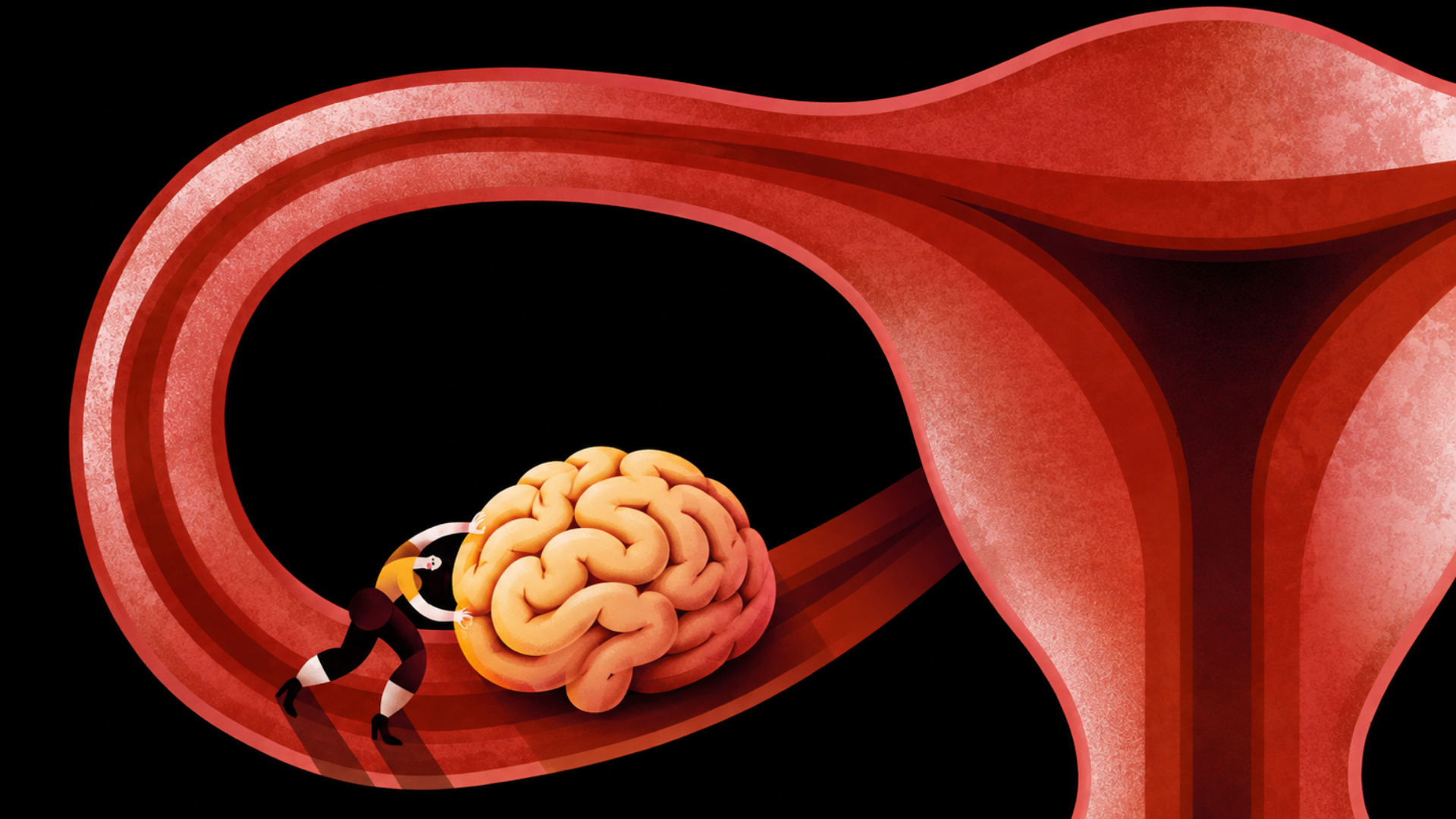
When we got to menopause, Joy didn't hold back. "Nobody believes it. I could feel that there was a connection." Her functional doctor believes it, she said, but most people tell her there's no connection.
"There is one hundred percent a connection. It was like somebody dropped a bomb of hormones in the middle of your life. And all of a sudden, what you could handle before, you just no longer could handle."
Here's what I shared with her. The two times a woman is most likely to be diagnosed with ADHD are when her child is diagnosed and when she enters perimenopause. Estrogen is pro-cognitive. Many of us were holding it together with estrogen's help, and when it starts to drop, we lose that support. Even women without ADHD tend to struggle with the cognitive symptoms of menopause. Add ADHD, and the strategies that used to work suddenly don't.
Then add rejection sensitivity on top of that. As Joy put it, it's a recipe for disaster.
Rejection sensitivity: the trait she'd give back
When I asked my button question, if you could push a button and never have ADHD, would you?, Joy said no, one hundred percent. So I tried out a new question on her: if you could pick the traits you came back with in another life, would you pick ADHD?
Yes, she said. But she'd customize it.
Her favorite trait is her hyperfocus and drive. "I don't think I would be as successful as I am. I don't think I would take the risks that I've taken if I didn't have ADHD." She credits it with her gutsiness: You're never promised tomorrow, so let's go. What's the worst that could happen?
The trait she'd get rid of is rejection sensitivity. (In the ADHD community, you'll sometimes hear it called rejection sensitive dysphoria.) For Joy, it looks like always assuming someone is mad at her or doesn't like her, and hearing things differently than they were meant. People call her a glass-half-empty person, but that's not what it is. It's years of being told she was lazy, wasn't trying, wasn't good enough. Joy was also adopted, which she calls a double whammy.
She told a story that stopped me. During a period when she was very sick and could barely process information, she would bring someone to her doctor's appointments or record them. She'd walk out upset about what the doctor had said, and the person with her would say, What are you talking about? He was really positive. When she listened to the recording, it was completely different from what she thought she'd heard.
Rejection sensitivity shows up for me at work, too. A community or a client calls, and I immediately jump to we did something wrong. Joy knows that feeling. "Thinking that there could be an issue with a client or a bill paralyzes me," she said.
And yet, put her in an actual crisis and she's calm. The truck breaks down on move day? "All right, we're going to pivot." That's a move manager's superpower. It's the anticipation of people being upset or not liking her that she finds so hard.
Isn't that something? Chaos in the street, no problem. A voicemail that says "call me back," and we're frozen.
What an ADHD move manager sees
I asked Joy what a move manager with ADHD brings to clients who have it, whether they've been diagnosed or not.
"It's very easy for us to spot it a mile away in someone else," she said. One client's daughter apologized in advance for interrupting and cutting Joy off. Within a few minutes of their first conversation, Joy could see that the daughter's brain was moving faster than her words could keep up. It didn't bother Joy at all. She let her talk, and she prepared her staff ahead of time: She's not being rude. This is just how her brain works. Give her space.
Joy sees it in homes, too. Families often say, "My mother's a hoarder," and when Joy walks in, many times she isn't. Life got ahead of her and the piles kept piling up. "They've got the same piles I've got," Joy said. They need someone to sit beside them and go through it. That's body doubling.
Most of her older clients are undiagnosed. It's still rare for someone from the Silent Generation or the Greatest Generation to tell her they have ADHD, though she's hearing it more often from boomers. When it comes up, she'll often mention her own ADHD ("I'm probably going to tell you a lot of stuff all at once, so bear with me"), and sometimes the client says, Oh, me too.
Why it matters to know, even at 70 or 80
People ask me why it matters for someone to learn they have ADHD at 70, after living with it their whole life. Here's my answer. There's a concept called gerotranscendence, which I learned when I became a Certified Senior Advisor. In the later stages of life, we look back and evaluate the decisions we made and the relationships we had. When you understand your life through an ADHD lens, there can be a lot of forgiveness and healing in those relationships.
I once gave a client I suspected had ADHD a copy of my book instead of telling her outright. She reached out to tell me it was resonating with her. You can usually tell who will be open to that conversation, and when they are, it can change lives.
Same piles, different why
I also want to clear something up, because this may be the first episode someone listens to. Because of my training with the Institute for Challenging Disorganization (ICD) and NASMM, I've learned that the piles in an ADHD home and a hoarding disorder home can look the same. The why is different. ADHD piles say: I'm overwhelmed. I don't know where to begin. I got excited about this project, then I got excited about something else and left it. Hoarding disorder, in my observation, is more closely linked to OCD, and it's treated with exposure therapy, not with someone coming in to work on it alongside you.
Joy's best hacks
Lists, and lists of lists. List-making is how Joy survived. Does she lose her lists? "All the time." She now uses her own company's to-do list pads more than she gives them to clients.
Build the planner your brain needs. Joy says we all have a notebook or planner we're sure is going to change our lives. None of them worked for her brain. So she designed her own, worked with a friend who's a printer to produce it, and now uses it in her business and her everyday life.
Let AI trim the oversharing. Joy tends to over-explain, especially in client letters. She writes it all out, then asks AI to simplify it.
Explore it. If you think you might have ADHD, learn more. Joy said that after taking my class, follow-through finally clicked for her as something to work on. The question became, What's hard for me, and how can I make it easier?
I've embraced that same question: how can I do life on easy mode? When I realized no one expects perfection from me, I started getting a lot more done. And when I show up as who I am, it gives other people permission to stop pretending too. Joy is brilliant. She built a business during a pandemic while caring for both of her parents. And she can't keep her house organized. That's the contradiction of ADHD.
Some people say we use ADHD as an excuse. I like to say it's not an excuse. It's an explanation.
Why moving is so hard on an ADHD brain
As Joy pointed out, executive functioning skills tend to diminish as we age. With ADHD, you start out already struggling with executive function. And moving is one of the most demanding executive-function tasks there is: planning, organizing, sequencing, and decision after decision.
Earlier in life, we usually move into bigger spaces, so we just pack everything up and unpack it. Right-sizing (some call it downsizing) is different. You can't safely fit everything, so every item becomes a decision. Then add the physical demands of moving as we get older. I call a home a museum of someone's life. If it took thirty, forty, fifty, or sixty years to accumulate, you're not going to go through it mindfully in a month. That's why it pays to start early, even if you're not moving yet.
Find the right help
In the South Shore of Massachusetts: Joy Murphy at Smooth Transitions of the South Shore, based in Plymouth.
In San Diego and the Coachella Valley (Palm Desert and Palm Springs): my company, Silver Linings Transitions. We offer move management and home organizing, and I offer clutter coaching to help people start making decisions, even before they're ready to move.
Anywhere else: find a member of the National Association of Senior and Specialty Move Managers at nasmm.org.
A word of caution. Because older adults are some of the few people moving in this housing market, some companies call themselves "senior movers" without the training behind it. NASMM members complete continuing education, follow a code of ethics, and carry mandatory insurance. Please look up the difference before you hire.
And move managers aren't just for seniors. We're for anyone who would rather spend their vacation days on an actual vacation.
Keep listening
If you saw yourself in Joy's story, listen to the full episode of Grandma Has ADHD wherever you get your podcasts, and share it with a friend so more people understand ADHD and its impact. It isn't all bad.
It is never too late to make the rest of your life the best of your life.
— Jami Shapiro, CSMM, CSA, Founder of Silver Linings Transitions, ADHD Coach, and host of the Grandma Has ADHD podcast
